
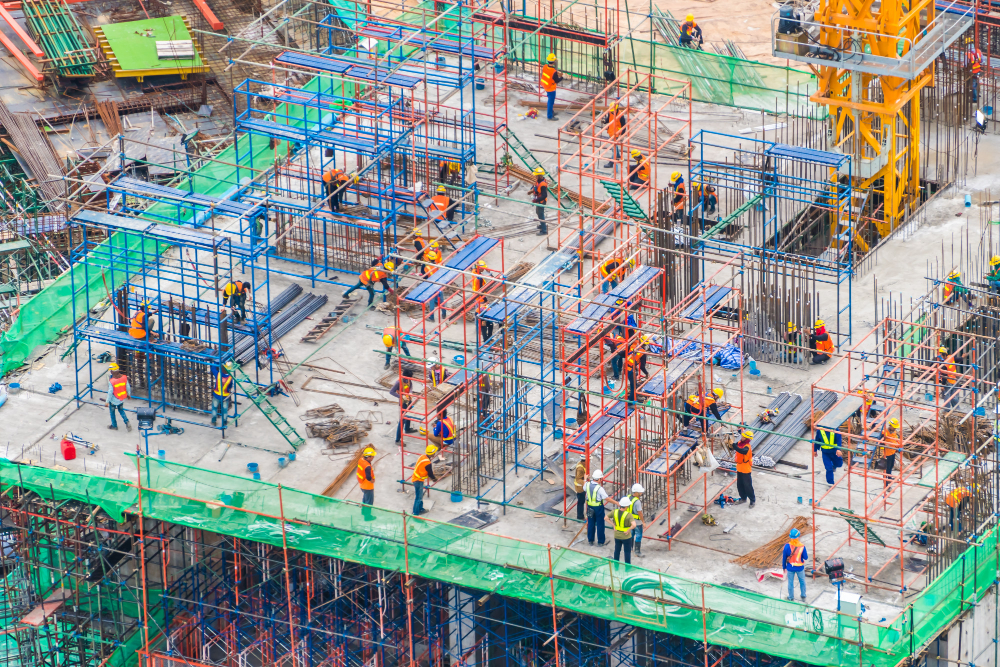
Construction and engineering businesses run on projects, not products. Every job has its own budget, subcontractors and claim schedule, and a risk of cost overrun if any of it isn’t tracked in real time. Pronto’s own research points to the cause: manual processes and spreadsheets that raise the risk of errors, duplicate work and silos between site, head office and finance, eroding the margin on a job that looked profitable at tender.
Pronto Xi is the ERP platform in SL Information’s portfolio built for this. Its Project module, part of the Asset & Facility Management application, handles job costing, progress billing and subcontractor management as core functionality, not a bolt-on. It sits alongside the same mobility, AI automation, customer communications and infrastructure portfolio SL Information delivers across its other industries.

Costing and submitting bids accurately enough to win the job without pricing away the margin.
What we offer
Turning a won contract into a structured project with budgets, cost centres and a hierarchy that reflects how the job will actually be managed.
What we offer
Managing materials procurement and subcontractor agreements — often the largest and riskiest cost category on a construction job.
What we offer
Keeping site work, labour and equipment moving in line with the project plan.
What we offer
Getting paid on time and accurately, against a claim schedule that reflects real progress on site.
What we offer
Keeping work-in-progress values accurate and the business compliant, project by project.
What we offer

Closing out a project cleanly and keeping clients, subcontractors and financiers informed along the way — not just at the end.
What we offer
The hardware foundation for ERP, warehouse and automation workloads

Protecting stock, customer and financial data across the whole chain
Pronto Xi — specifically its Project module, part of the Asset & Facility Management application, which is built around job costing, progress claims and subcontractor management rather than adapted from a generic manufacturing template. Infor M3 is not positioned for construction.
Yes — the Project module supports three claiming methods (direct invoicing, progress invoices, progress claims), customizable retention percentages, and a defined claim lifecycle from entry through to paid.
Project hierarchies support up to 20 levels (Grandparent, Parent, Child, Adult), with a full Cost Breakdown Structure for granular cost allocation per project.
There’s a dedicated Project Sub-Contractor module — separate from general procurement — handling scheduled-rate or lump-sum agreements, retention and variations specific to subcontractor relationships.
Through percentage-of-completion profit take-up, with a choice of four calculation methods, and close-out rules that prevent a project from closing until WIP is properly cleared — so profit isn’t recognized before it’s actually earned.
StockIT extends into site and yard material/equipment tracking with mobile barcode scanning; equipment hire is tracked via timesheets integrated into the Project module itself.
Yes — Mountaintop e-Invoice Middleware connects the ERP to LHDN’s MyInvois platform for compliant submission, which applies to construction billing the same as any other industry above the compliance threshold.
It depends on scope — number of active projects, subcontractor relationships and integrations involved. In Malaysia, a typica ERP Implementation with Manufacturing module takes at least 3-6 months.